 Bureau case file76% confidence
The jar marked 125
Pharmacy dispensing jar with a batch label
A £2 car boot jar with a paper trail.
This case began with a £2 car-boot purchase: a squat blue-and-white jar carrying nothing more informative, at first sight, than a paper label reading “125.” The number has the bluntness of a stock mark rather than a product name. It is precisely the sort of object that survives after its contents, stopper and place of work have disappeared.
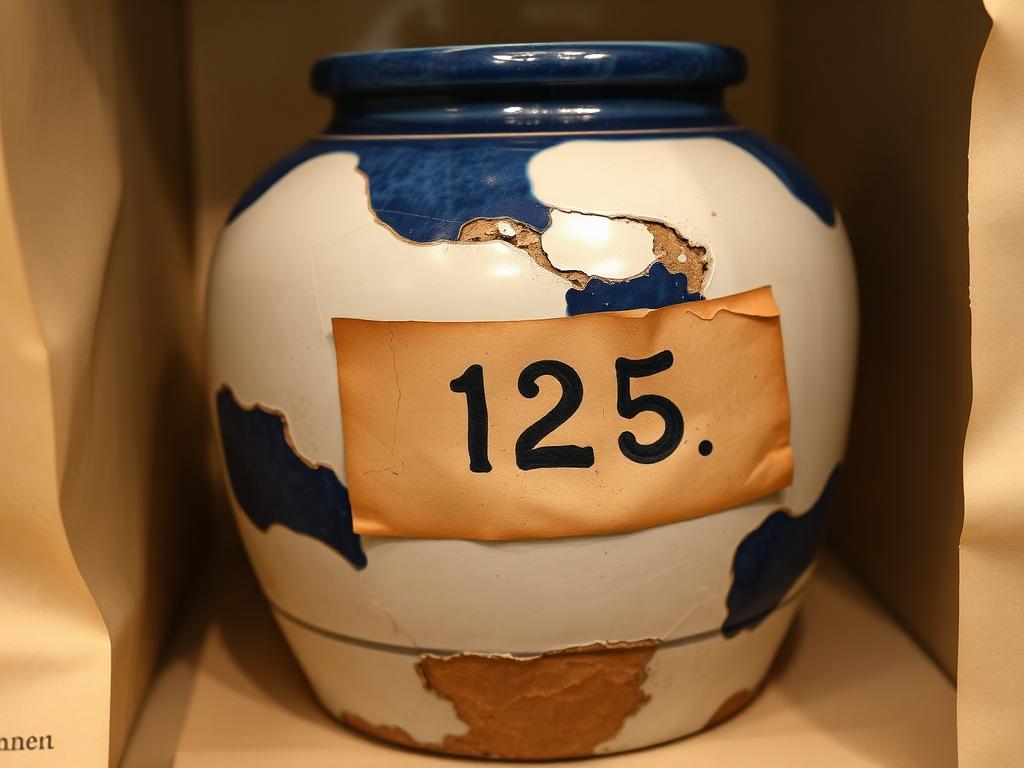
The photograph shows a rounded ceramic jar with a broad foot, swollen body, narrow shoulder and short, thickened neck. A deep cobalt-blue band runs around the upper rim, with further blue areas on the body against a white ground. The surface is glazed, though the glaze is extensively worn and lost in places. Large chips and flaked areas expose a brownish ceramic body beneath, particularly below the neck and around the lower edge. Fine crazing is visible across the white glaze. No lid, stopper, maker’s stamp or inscription is visible in the image.
The paper label is old-looking but should be treated separately from the jar until examined in hand. It is a rectangular buff label, visibly creased and browned, with the black-painted or printed number “125.” and a full stop. Its placement is functional, centred on the main viewing face, rather than decorative. The sparse numerical marking makes a domestic storage jar, commemorative pot or ordinary decorative vase less convincing: such wares usually advertise contents, maker or pattern, not a lone operational number.
A pharmacy dispensing or stock jar is the strongest identification. Chemists and dispensaries needed containers that could be recognised quickly, cleaned repeatedly and returned to a fixed place. In some systems the name of a substance appeared on a separate, replaceable label while a numbered code linked the vessel to a ledger, stock book or internal list. Here, the replaceable paper label, durable glazed ceramic and robust, wide-mouthed form accord with that use. The photograph does not show enough to identify what number 125 represented; it should not be read as a dose, date or price without the associated record.
The object is therefore best described as a British pharmacy dispensing jar with a batch or inventory label, rather than as a named drug jar. Its heavily worn appearance is consistent with long handling and shelf use, although wear alone cannot prove professional service. The blue-and-white treatment is practical as well as familiar: cobalt decoration remained legible against pale ceramic, while glazed earthenware was economical and suited to routine storage. The missing closure matters, since jars of this kind commonly had a cover, cork, stopper or other fitted top depending on contents and period.
A date of about 1900–1930 is reasonable from the general utilitarian ceramic form, the cobalt-and-white palette and the plain numerical paper label. The stated United Kingdom origin is plausible in the context of British chemist’s shop practice, but the photograph supplies no factory mark or retailer name with which to prove it. The uneven, hand-applied-looking blue areas and the substantial ceramic body support an early twentieth-century working vessel more readily than a modern printed replica, though the image cannot settle manufacture conclusively.
Beyond doubt would require photographs of the base, neck and interior, especially any impressed or printed maker’s mark, retailer’s name, inventory notation or old adhesive beneath the label. Measurements, evidence of a ground lid seat, and a comparison with a surviving chemist’s ledger carrying item 125 would be decisive. As photographed, and with substantial glaze loss, it is a modest but characterful piece of pharmacy ephemera rather than a high-value apothecary jar. A rough retail range would be £15–£40, rising only if a maker, named pharmacy, original closure or matching ledger documentation emerged.
Illustrative bureau case study — prepared by the Object Detective bureau.
Share the case
Anyone with this link sees the evidence, timeline and verdict — no account needed.
https://objectdetective.app/mysteries/showcase/000b8701-0d65-4157-881b-91c870f7ac6c?v=20260903
Facebook: tap Facebook to copy the link, then Open Facebook and paste it into a new post. TikTok and Instagram copy the link for you to paste in-app.
Case notes from the bureau
Add the first note
Members can add what they recognise, correct the record, or leave a lead for the next investigator.
Members only — sign in to add a note or back one.
Sign in